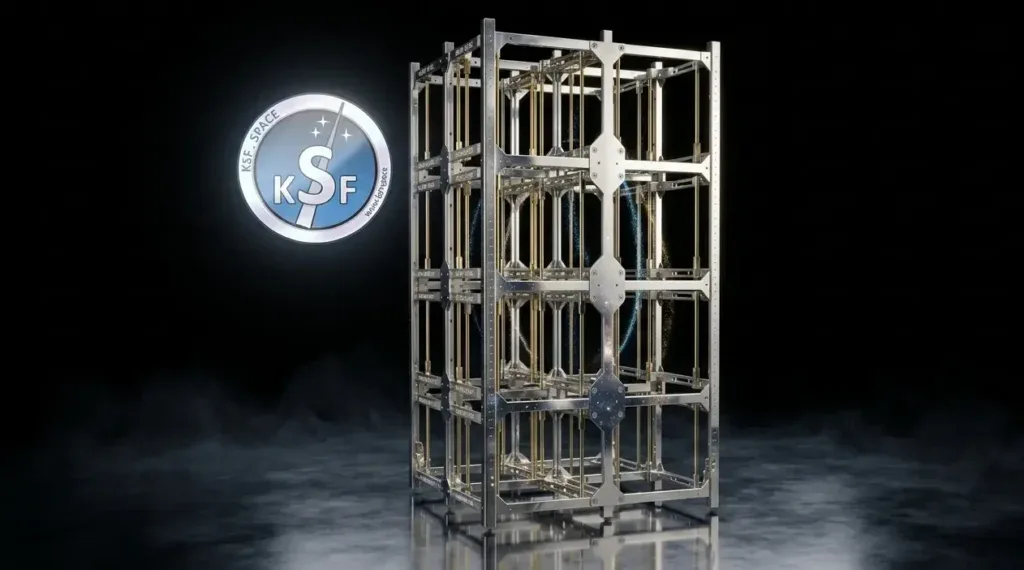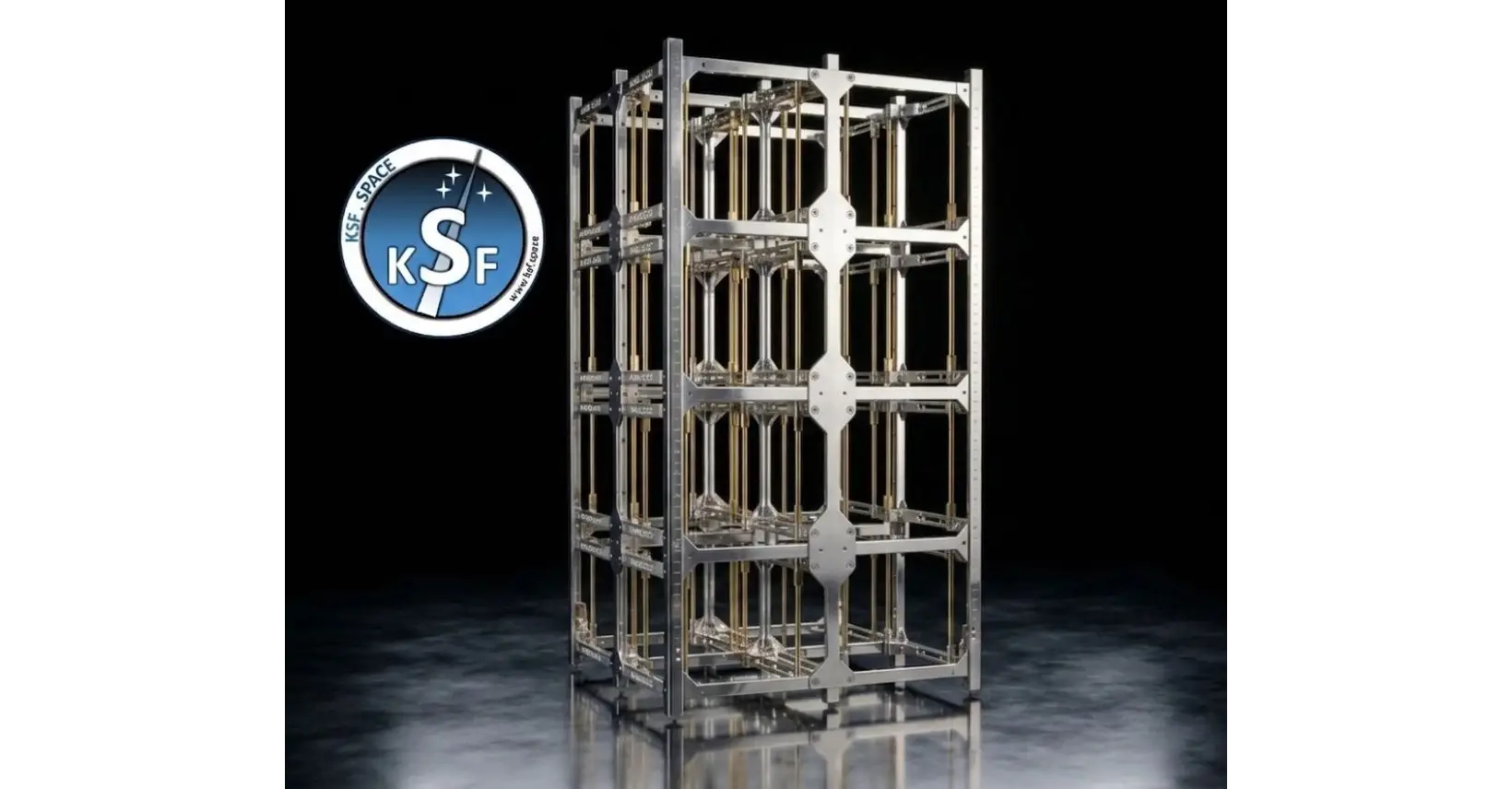
In the contemporary aerospace sector, selecting the right cubesat structure is the single most critical hardware decision in a mission’s lifecycle. Historically, entering the satellite market required deep corporate pockets or massive government grants. A flight-qualified small satellite frame could easily command prices upwards of $20,000 to $45,000, severely limiting access for universities, independent research groups, and emerging NewSpace startups.
KSF Space, operating as a US-registered non-profit organization dedicated to space democratization, has completely disrupted this narrative. By leveraging industrial additive manufacturing, precision engineering, and a non-profit pricing model, KSF Space offers the most affordable 16u cubesat structure chassis frame in the world.
Whether your mission involves setting up an Internet of Things (IoT) constellation, testing deep-space telecommunications, or conducting advanced Earth observation, this flight-proven cubesat frame balances mass efficiency, rugged durability, and extreme affordability. It arrives at your cleanroom 100% ready for your space mission.
The Evolution of Small Satellite Form Factors: From 1U to 24U
The CubeSat Design Specification (CDS), originally established by Cal Poly, uses a standardized modular unit (“U”) where $1\text{U} = 10 \times 10 \times 10\text{ cm}$. As payloads have evolved from simple technology demonstrations to high-revenue commercial services, the demand for larger nanosatellite variants has grown exponentially.
The KSF Space engineering ecosystem supports the complete lifecycle of these modular form factors, providing off-the-shelf and customizable alternatives across the standard development spectrum:
| Form Factor | Dimensions (Approximate) | Primary Application Areas |
| 1U | $10 \times 10 \times 10\text{ cm}$ | STEM education, simple beacon tracking, initial orbital testing |
| 2U | $10 \times 10 \times 20\text{ cm}$ | Biological experiments, compact attitude control testing |
| 3U | $10 \times 10 \times 30\text{ cm}$ | The classic commercial workhorse, early Earth observation |
| 6U | $10 \times 20 \times 30\text{ cm}$ | High-resolution imaging, localized IoT routers |
| 12U | $20 \times 20 \times 30\text{ cm}$ | Advanced scientific payloads, multi-band communication arrays |
| 16U | $22 \times 22 \times 44\text{ cm}$ | Commercial constellations, high-power transceivers, IoT |
| 24U | $20 \times 30 \times 40\text{ cm}$ | Deep-space exploration, complex telecommunication nodes |
While smaller units like the 1u, 2U, and 3u frames are ideal for early-stage testing and academic groups, the 16u cubesat structure serves as the optimal “sweet spot” for modern commercial applications. It bridges the gap between nanosatellites and larger, more expensive microsatellite platforms, giving engineers the volumetric space required for advanced avionics without pushing them into a higher launch cost bracket.
Engineering Excellence: Inside the 16U Cubesat Structure Chassis Frame
A professional nanosatellite structure frame must do far more than simply act as a physical enclosure. In the vacuum of Low Earth Orbit (LEO), the chassis serves as a vital thermal radiator, a Faraday cage protecting internal electronics from severe solar radiation, and a mechanical shield capable of surviving the violent acoustic and vibrational loads of rocket deployment.
The https://ksf.space 16U cubesat structure is built around a “Rapid-Integration” philosophy, utilizing specialized materials optimized for deep-space environments.
1. Advanced Material Science: Aluminum vs. Specialized Polymers
KSF Space utilizes two primary high-performance structural paths depending on specific mission envelopes:
- Aerospace-Grade Aluminum (6061-T6 / 7075 / AlSi10Mg): Precision CNC-machined or laser-melted, these metal frames deliver unparalleled structural rigidity and superior thermal conductivity. Aluminum acts as a highly efficient heat sink, protecting internal PCB stacks from the extreme thermal fluctuations of LEO.
- Advanced PA11 Polymer via Multi Jet Fusion (MJF): For ultra-tight mass allocations, KSF Space offers bio-sourced PA11 structures that are up to 40% to 50% lighter than traditional metal frames. This massive mass reduction directly minimizes your launch slot costs, allowing you to allocate more weight to critical payloads or battery arrays.
2. Hard-Anodized Rails and NASA-Grade Finishes
To comply with strict NASA, ESA, and launch provider deployer standards, all outer rails on KSF Space aluminum frames undergo a specialized hard-anodization process. This prevents “cold welding”—a dangerous phenomenon where identical metals fuse together in a space vacuum—ensuring your satellite slides smoothly out of its canister. For polymer components, a vapor-honed, chemically smoothed “Black Smooth” finish is applied to optimize thermal emissivity and meet strict low-outgassing requirements.
3. Modular Shear Panels for Accelerated Assembly
One of the key engineering advantages of the KSF Space design is the integration of detachable shear panels. This layout allows engineering teams to easily access, test, and troubleshoot the internal electronics stack even after the main chassis has been partially built. This design philosophy eliminates hundreds of assembly hours during the crucial Integration and Testing (I&T) phase.
Unmatched Flight References and Launch Compatibility
When building an orbital mission, trust is built through flight heritage. A cubesat frame from KSF Space comes with extensive flight references, having been validated through rigorous physical testing and suborbital/orbital operations.
Compliance and Environmental Testing
Every KSF Space cubesat structure is engineered and verified under the strict NASA-GSFC-STD-7000 (GEVS) framework. The structures are verified through advanced Finite Element Analysis (FEA) and physical testing to withstand:
- Mechanical Vibrations: Built to easily survive high-G launch profiles ($10\text{G+}$ RMS).
- Factors of Safety: Adheres to a strict 1.25 Yield and 1.4 Ultimate Factor of Safety, ensuring stability through Max-Q.
- Thermal Vacuum (TVAC) Cycling: Validated to maintain standard operational margins between $-40^\circ\text{C}$ and $+85^\circ\text{C}$.
Launcher-Agnostic Design
The 16U structure features standard internal mounting holes fully aligned with the global PC/104 standard. This guarantees seamless compatibility with most Commercial Off-The-Shelf (COTS) flight computers, power systems (EPS), and radio transmitters. Externally, the frame matches standard universal dispenser envelopes, making it completely “launcher-agnostic” and ready for integration onto major flight platforms including the SpaceX Falcon 9, Rocket Lab Electron, and ISRO PSLV.
Complete Flexibility: Customize Structure Configurations for Specialized Payloads
No two space missions are identical. Earth observation missions require highly precise optical apertures; climate satellites need specialized mounting brackets for multi-band sensors; and defense arrays require dedicated antenna deployment ports.
Realizing these unique requirements, KSF Space offers a comprehensive customize structure service. Rather than forcing your team to design around a rigid box, KSF Space can provide custom CNC milling and modifications directly to the 16U chassis or side panels.
Tailored Engineering Support: Whether you need custom cutouts for camera brackets, integrated sun sensor mounts, or unique deployment mechanisms, the engineering team at KSF Space can adapt standard configurations to fit your exact internal volume layout.
Frequently Asked Questions (FAQ)
Why is the KSF Space 16U cubesat structure the most affordable in the world?
Unlike traditional commercial aerospace corporations that answer to private shareholders and add significant markups, KSF Space operates as a US-registered non-profit organization. Their mission is the global democratization of space technology, allowing them to provide high-quality, flight-ready hardware near manufacturing cost.
Can I get a customize structure for the 16U frame to fit my specific sensors?
Yes. KSF Space specializes in tailoring side shear panels and internal mounting brackets. You can provide your exact dimensions, camera apertures, or antenna ports to the engineering team for custom CNC milling or specialized 3D printing.
Does the 16U frame include the necessary aerospace fasteners?
Yes, all KSF Space structural kits arrive complete with the necessary aerospace-grade, flight-qualified screws, fasteners, and alignment rings required for full structural integration.
What is the lead time for a 16U cubesat structure?
Because KSF Space maintains an active inventory to support global research partners, standard structures typically ship within 1 to 4 weeks. Custom tailored configurations generally require 4 to 6 weeks depending on the complexity of the custom machining.
References
- CubeSat Design Specification (CDS), California Polytechnic State University. Standard guidelines governing operational boundaries of nanosatellite envelopes.
- NASA-GSFC-STD-7000, General Environmental Verification Standard (GEVS) for Goddard Space Flight Center Flight Programs and Projects.
- NewSpace Industrial Analysis (2026), Comparative Analysis of Additive Manufacturing vs. Traditional CNC Machining in Low Earth Orbit (LEO) Structural Dynamics.
- KSF Space Foundation Aerospace Heritage Report, Internal Flight Logs and Material Evaluation Studies under Vacuum Conditions.